
Home | community connect | Educator Zone | Key Highlights and Changes in the National Education Policy 2020
What the National Education Policy Means for Schools, Students & Teaching Practices
The *National Education Policy (NEP) 2020* introduces structural and academic reforms that fundamentally change how education is delivered in India. The shift from the traditional *10+2 system to the 5+3+3+4 education structure* reflects a move toward holistic, flexible, and skill-oriented learning.
Understanding these changes is essential for schools to align academic planning, assessment models, and classroom practices with national priorities.

What Is the NEP 2020 Structure (5+3+3+4 System)?
The NEP 2020 replaces the decades-old 10+2 framework with a *developmentally aligned 5+3+3+4 structure*, designed around students' cognitive growth stages.
This structure emphasises *early childhood education, conceptual clarity, and multidisciplinary learning*.
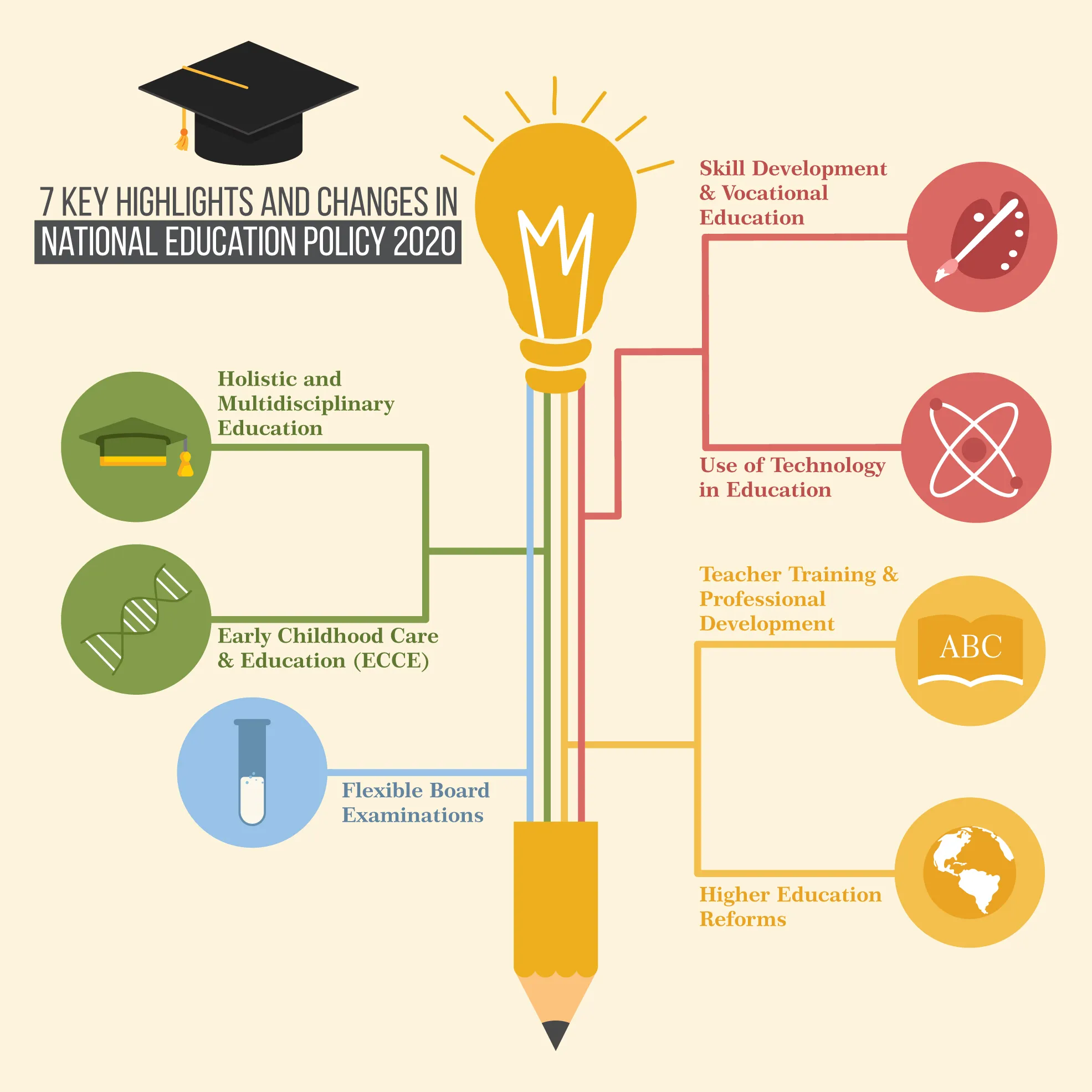
7 Key Highlights and Changes Introduced by NEP 2020
1. Early Childhood Care and Education (ECCE)
NEP 2020 places strong emphasis on early learning by integrating pre-school education into the formal education framework. The focus is on *play-based, activity-oriented learning* to strengthen foundational literacy and numeracy.
2. Shift from Rote Learning to Competency-Based Education
The policy moves away from memorization toward *application, analysis, and critical thinking*. Learning outcomes are measured by competencies rather than textbook recall.
3. Holistic Progress Card (360-Degree Assessment)
Traditional marks-based report cards are replaced with the *Holistic Progress Card*, which evaluates students on:
This encourages continuous feedback and overall growth.
4. Multidisciplinary and Flexible Subject Choices
Rigid boundaries between science, commerce, and arts are removed. Students can now explore *interdisciplinary combinations*, promoting creativity and individual interests.
5. Vocational Education from an Early Stage
Vocational exposure begins from *Class 6*, including hands-on skill training and internships. This prepares students for real-world problem-solving and employability.
6. Integration of Technology in Education
NEP 2020 promotes the use of *digital tools, online learning platforms, and educational technology* to enhance access, personalization, and quality of learning.
Technology plays a key role in:
7. Continuous Professional Development (CPD) for Teachers
Teachers are required to complete *50 hours of professional development annually*. This ensures continuous improvement in teaching methods, subject knowledge, and digital skills.
How NEP 2020 Changes the Role of Schools
Schools are no longer just academic institutions'they become *learning ecosystems* that nurture skills, values, and lifelong learning.
NEP 2020 encourages schools to:
strengthen teacher training systems
Why Understanding NEP 2020 Is Critical for Schools
Successful implementation of NEP 2020 requires:
Schools that proactively adapt to these changes are better positioned to deliver *future-ready education*.
NEP 2020 as a Foundation for Future Education
The National Education Policy sets the direction for the next generation of learners by focusing on
*holistic
development, flexibility, and skill-based learning*.
Understanding its structure and key highlights helps schools move beyond compliance toward meaningful educational
reform.
Prepare Your School for NEP 2020 Reforms
Align academic structures, assessments, and learning practices with the vision of the National Education Policy.