
In recent years, personalised learning has become an increasingly popular approach to education. Unlike traditional teaching methods that focus on a one-size-fits-all approach, personalised learning tailors instruction and support to meet the unique needs and preferences of individual students. With advances in technology, Learning Management Systems (LMS) have emerged as a powerful tool to facilitate personalised learning. In this blog, we will explore the meaning, objectives, benefits, and usage of personalised learning, as well as the role of an LMS in this approach to education. We will also highlight how Entab's experiential learning assets can help students and schools achieve these goals.
Meaning and Objectives of Personalised Learning
Personalised learning is an approach that tailors instruction, content, and support to meet the unique needs, interests, and preferences of individual learners. The objective of personalised learning is to improve student engagement, motivation, and achievement by empowering students to take ownership of their learning and providing them with the resources, guidance, and support they need to succeed. Personalised learning aims to address the diverse learning styles, abilities, and backgrounds of students and to create an environment that fosters student-centered learning, collaboration, and creativity.
Importance and Benefits of Personalised Learning
Personalised learning offers several benefits over traditional teaching methods. Firstly, it provides students with the opportunity to learn at their own pace, which can help to reduce stress, anxiety, and boredom. This approach also allows students to focus on their areas of strength and interest, which can increase motivation and engagement. Personalised learning also enables teachers to identify and address the unique needs and challenges of individual students, which can help to improve academic outcomes and reduce achievement gaps. In addition, personalised learning can foster a more collaborative and student-centered learning environment, which can help to develop essential skills such as critical thinking, communication, and problem-solving.
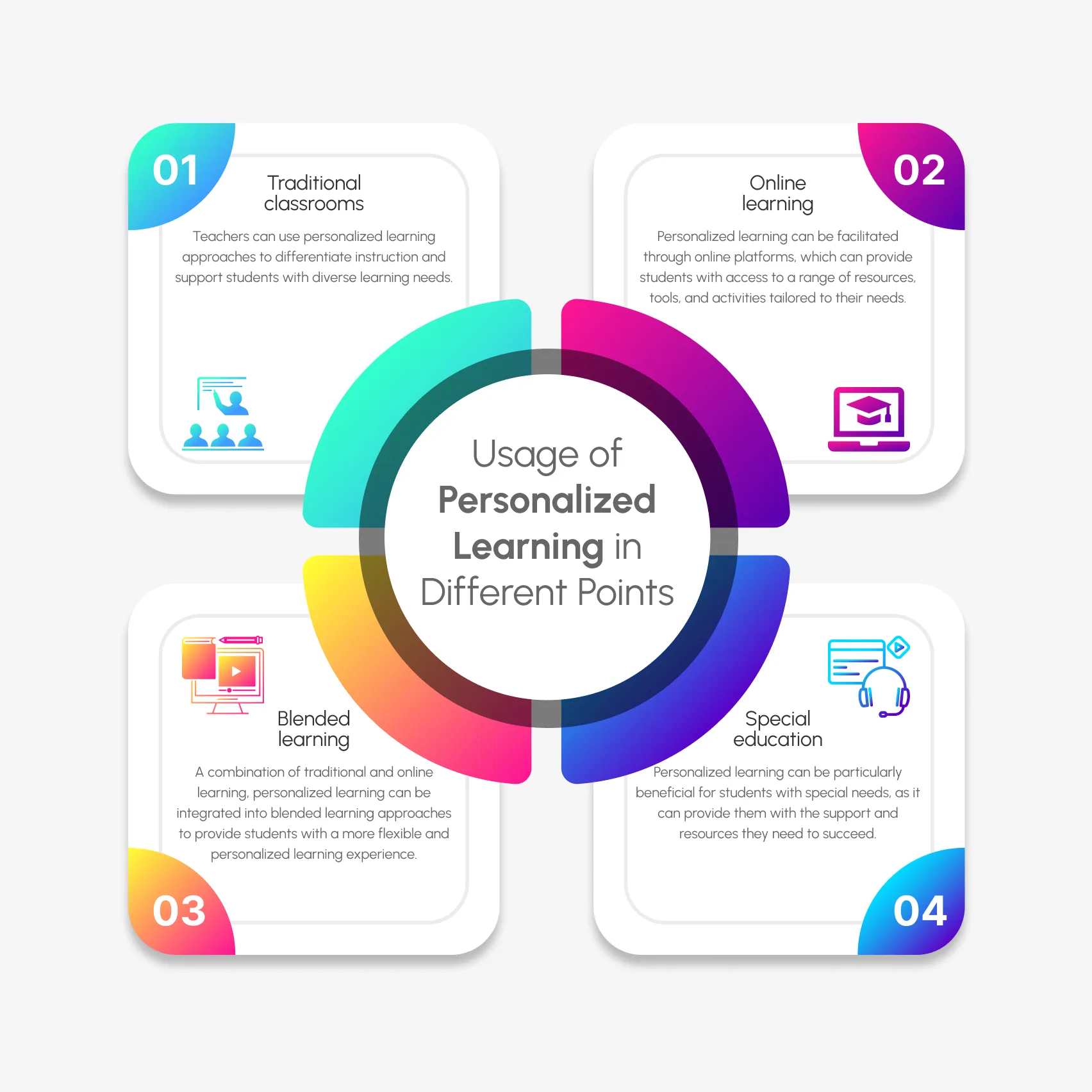
Usage of Personalised Learning in Different Points
Personalised learning can be used in a variety of settings and contexts, including:
Traditional classrooms: Teachers can use personalised learning approaches to differentiate instruction and support students with diverse learning needs.
Online learning: Personalised learning can be facilitated through online platforms, which can provide students with access to a range of resources, tools, and activities tailored to their needs.
Blended learning: A combination of traditional and online learning, personalised learning can be integrated into blended learning approaches to provide students with a more flexible and personalised learning experience.
Special education: Personalised learning can be particularly beneficial for students with special needs, as it can provide them with the support and resources they need to succeed.
The Role of an LMS in Personalised Learning
An LMS can play a crucial role in facilitating personalised learning. An LMS is a platform that allows teachers to create, manage, and deliver online courses and learning materials. It can also provide students with access to a range of resources, tools, and activities that are tailored to their individual needs and preferences. An LMS can help to:
Entab's Experiential Learning Assets
Entab is a leading provider of educational technology solutions that can help schools and students to achieve their goals. Entab's experiential learning assets include a range of digital tools and resources that canfacilitate personalised learning and provide students with a more engaging and interactive learning experience. Some of the key features of Entab's experiential learning assets include:
Customisable lesson plans: Entab's lesson plans can be customised to meet the unique needs and preferences of individual students, allowing teachers to tailor instruction and support to meet the diverse needs of their students.
Interactive content: Entab's digital content is designed to be interactive and engaging, allowing students to explore and learn in a way that suits their learning style.
Personalised assessments: Entab's assessments are designed to be personalised, allowing students to demonstrate their knowledge and skills in a way that suits their individual strengths and abilities.
Analytics and data: Entab's analytics and data tools provide teachers with insights into student performance, allowing them to identify areas of strength and weakness and tailor instruction accordingly.
Collaboration and communication: Entab's communication and collaboration tools enable teachers and students to work together in a more collaborative and student-centered environment, fostering a culture of learning and engagement.
Overall, Entab's experiential learning assets can provide schools and students with the tools and resources they need to achieve their goals and promote a more personalised and engaging learning experience. By leveraging the power of technology and personalization, schools and educators can help students to reach their full potential and prepare them for success in the 21st century.